AI & automation
AI Implementation Readiness Guide
Decide whether a proposed AI workflow is ready for a controlled pilot. Define the task, permitted information and actions, evaluate complete outcomes, plan human review capacity and record the release boundary and conditions for stopping.
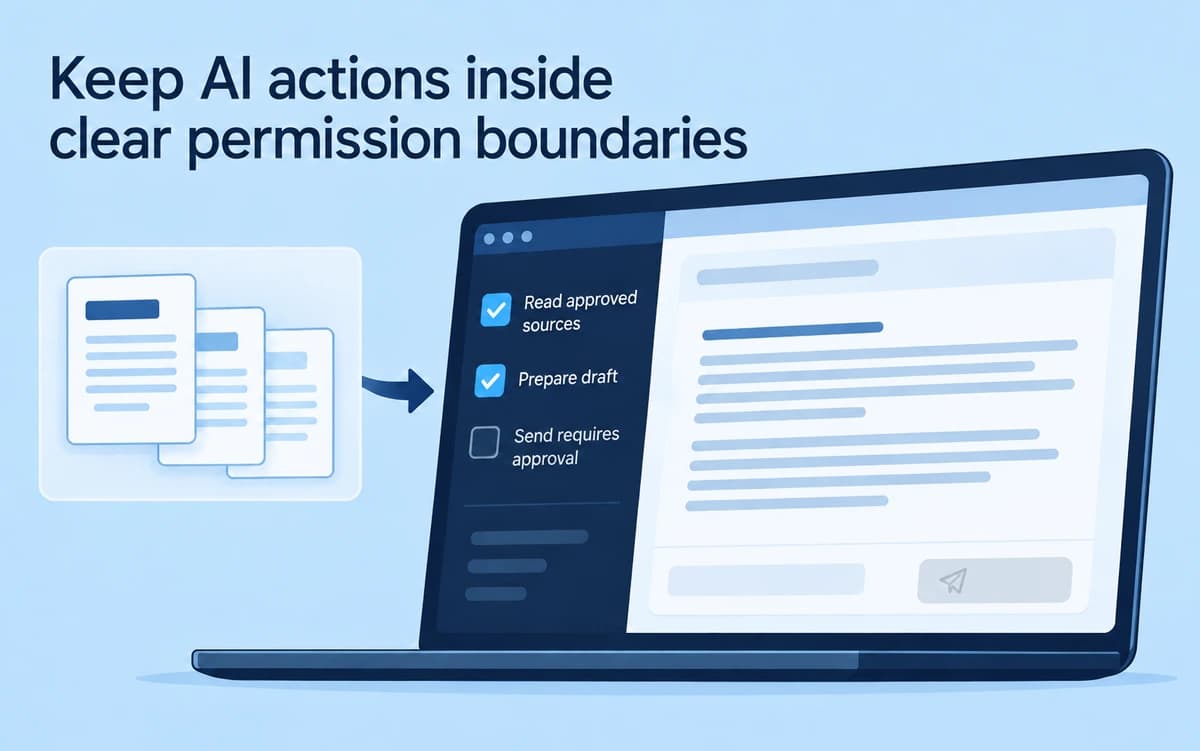
Evaluate the workflow before authorising the pilot
A convincing demonstration leaves important operating questions unanswered. This guide helps business and technical owners examine the inputs, decisions, connected actions and review effort around an AI task. The final decision record captures what is permitted, what has been tested and what must happen if the workflow fails.
Inside the resource
Define the task and information boundary
Specify the intended output, recipient and permitted action. Compare with current work, identify affected people and preserve access controls from source information through retrieval, processing and delivery.
Test outcomes and human control
Build representative evaluations with defined quality criteria and meaningful failure cases. Test connected actions, review authority, unavailable-reviewer routes and the effort required to handle corrections and escalations.
Set the pilot conditions
Limit users, task types, information and actions to the evaluated scope. Assign monitoring and stop authority, then complete the decision record for proceeding, holding or redesigning the pilot.
A few practical details
Is a high model accuracy score enough to start a pilot?
The guide requires evidence for the complete workflow, including access boundaries, connected actions, review effort, failure handling and operating ownership. A single model score cannot establish those conditions.
How should human review time be estimated?
Include preparation, checking, correction, rejected outputs and specialist escalation. Test the queue under expected peak demand and compare total effort with the current process.
When should the readiness decision be reopened?
Reassess when the model, retrieval configuration, data, users, permissions or intended actions change materially. Retest affected behaviour before expanding the release boundary.
Need practical guidance for your next decision?
Turn a useful framework into a practical next step for your team.
Talk to Us